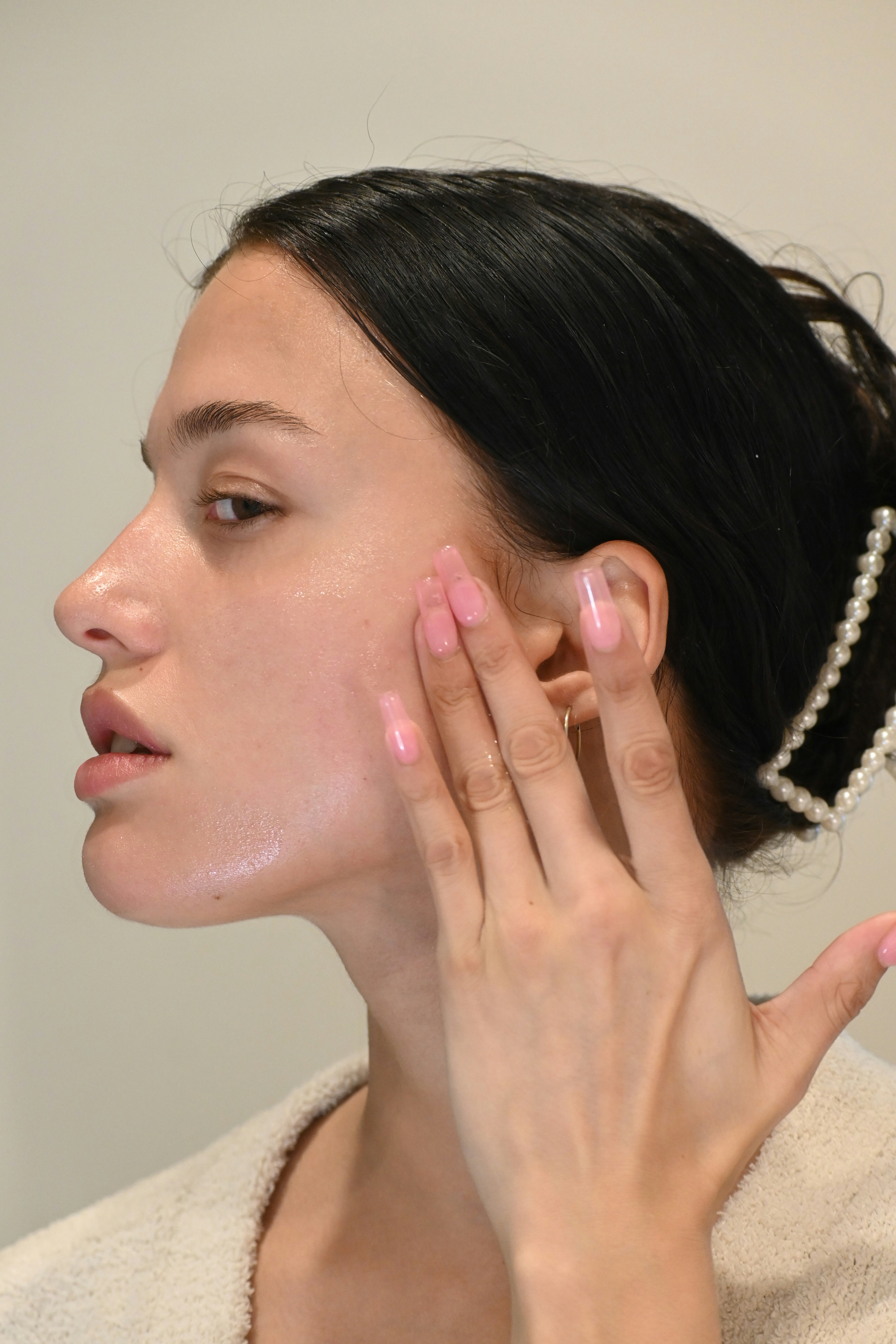
A shorter routine can make irritation, product overlap, and results easier to understand. Minimalist skincare is not about avoiding useful treatments; it is about keeping the essentials and adding only what serves a clear goal.
The Breaking Point: Why We're All Overwhelmed
The Product Overwhelm Phenomenon
The average person now owns 40 different beauty and skincare products, yet uses only 15 regularly. This accumulation isn't just cluttering our bathrooms; it's overwhelming our skin and our mental bandwidth. With endless product launches, TikTok trends, and influencer recommendations bombarding us daily, decision fatigue has become a real concern in the skincare world.
The Hidden Cost of Complexity
Beyond the obvious financial burden, complex routines carry hidden costs. Time investment becomes significant when a 10-step routine can take 30-45 minutes twice daily. Mental energy is consumed by tracking which products to use when and in what order. Skin stress occurs through over-exfoliation and product interactions causing irritation. Environmental impact accumulates from excessive packaging and product waste. Storage challenges arise from maintaining proper storage conditions for multiple products.
The Science Behind Skincare Minimalism
What Your Skin Actually Needs
Dermatologists consistently emphasize that healthy skin requires just four core elements. Cleansing removes dirt, oil, and environmental pollutants. Moisturizing maintains the skin barrier and prevents water loss. Sun protection prevents UV damage and premature aging. Treatment addresses specific concerns with targeted actives. Everything else is optional enhancements that may or may not provide additional benefits.
The Skin Barrier Revolution
Recent research has revolutionized our understanding of skin health, placing the skin barrier at center stage. Your skin barrier is like a brick wall, with skin cells as bricks and lipids as mortar. When this barrier is compromised through over-cleansing, excessive exfoliation, or incompatible product combinations, you experience increased sensitivity and redness, dehydration and tightness, increased breakouts, accelerated aging signs, and reduced effectiveness of active ingredients.
The Minimalist Advantage
A simplified routine supports skin barrier health by reducing potential irritants and allergens, allowing proper pH balance to be maintained, giving skin time to self-regulate, improving product penetration and effectiveness, and reducing risk of product interactions.
Building Your Simplified Routine
The Morning Essentials
Step 1: Gentle Cleansing
For most people, a simple water rinse or extremely gentle cleanser in the morning is sufficient. Your skin hasn't accumulated dirt overnight—just natural oils that help protect your barrier. Look for product characteristics including pH-balanced formulas between 4.5-5.5, formulas free from sulfates and harsh surfactants, non-foaming or low-foaming textures, and fragrance-free options for sensitive skin.
Step 2: Hydration
One quality moisturizer is all you need. Skip the toner, essence, serum, ampoule cascade—a well-formulated moisturizer contains all the hydrating ingredients these products offer. Key ingredients to prioritize include hyaluronic acid for water retention, ceramides for barrier support, niacinamide for multi-functional benefits, and glycerin for humectant properties.
Step 3: Sun Protection
Non-negotiable. A broad-spectrum SPF 30 or higher protects against 97% of UVB rays. Modern formulations no longer leave white casts or greasy finishes. Modern SPF innovations include tinted formulas that double as foundation, lightweight gel textures for oily skin, moisturizer-SPF combinations for efficiency, and mineral options for sensitive skin.
The Evening Routine
Step 1: Effective Cleansing
If you've worn sunscreen or makeup, double cleansing makes sense—but not with elaborate products. An oil cleanser followed by a gentle water-based cleanser thoroughly removes the day.
Step 2: Treatment (If Needed)
This is where you address specific concerns with one targeted active. Retinoids work for anti-aging and acne. Azelaic acid addresses hyperpigmentation. Vitamin C provides brightness and protection. Choose one. Seriously, just one.
Step 3: Moisturize
The same or a slightly richer version of your morning moisturizer, depending on your skin's needs.
Real Results: The Minimalist Difference
Case Studies from the Skincare Community
Sarah, 36, Busy Professional and Parent
Previous Routine: 8-step morning, 10-step evening, monthly product costs exceeding $200
Simplified Routine:
AM: Vanicream cleanser, COSRX snail mucin, CeraVe PM, EltaMD tinted SPF
PM: Same, minus SPF, plus occasional retinol
Results After 3 Months:
"My skin looks the same, maybe calmer"
Reduced morning routine to 5 minutes
Saved approximately $150 monthly
Eliminated decision fatigue
No more product-induced irritation
The Calming Effect
When you simplify your routine, something remarkable happens: your skin calms down. The constant bombardment of ingredients stops, inflammation decreases, and your skin's natural regulation mechanisms kick in.
Many people report that after an initial adjustment period (2-4 weeks), their skin actually looks better than it did with extensive routines. Redness decreases, texture improves, and that elusive "glow" appears—not from highlighter or expensive serums, but from genuinely healthy skin.
Choosing Your Core Products
Quality Over Quantity
With fewer products in your routine, you can afford to invest in higher-quality formulations. This doesn't necessarily mean expensive luxury brands—many affordable brands offer excellent, dermatologist-approved formulations.
The Multi-Tasking Approach
Modern skincare formulations are sophisticated enough to address multiple concerns simultaneously:
Niacinamide: Brightens, minimizes pores, reduces oiliness, strengthens barrier
Hyaluronic Acid: Hydrates, plumps, improves texture
Ceramides: Repairs barrier, reduces sensitivity, prevents moisture loss
Retinoids: Anti-aging, acne treatment, texture improvement
One product containing several of these ingredients can replace multiple single-function products.
Brand Recommendations for Minimalists
Affordable Excellence:
CeraVe: Dermatologist-developed, ceramide-rich formulas
Vanicream: Ultra-gentle, free from common irritants
The Ordinary: Single-ingredient focus, budget-friendly
La Roche-Posay: Pharmaceutical-grade, sensitive skin specialists
Mid-Range Investment:
Paula's Choice: Science-backed formulations
COSRX: K-beauty minimalism at its finest
First Aid Beauty: Gentle but effective actives
Common Concerns Addressed
"But What About My Specific Skin Issues?"
Minimalism doesn't mean abandoning treatment. It means being strategic:
For Acne: A gentle cleanser + niacinamide/salicylic acid treatment + oil-free moisturizer + SPF handles most cases without 12 different acne-fighting products.
For Anti-Aging: Retinoid + antioxidant serum + moisturizer + SPF provides comprehensive protection and renewal.
For Hyperpigmentation: Vitamin C or azelaic acid + niacinamide + SPF (crucial!) addresses dark spots effectively.
For Dryness: Rich cleanser + hyaluronic acid serum + ceramide moisturizer + occlusives like petroleum jelly on dry areas.
"Won't I Miss Out on New Innovations?"
The skincare industry launches hundreds of products monthly, but true innovations are rare. Most "new" ingredients are repackaged existing compounds or untested trendy additives.
By focusing on proven ingredients with decades of research, you're choosing efficacy over marketing hype. When genuine breakthroughs occur (like retinoids, vitamin C, or niacinamide), they're quickly incorporated into quality formulations.
"How Do I Transition Without Shocking My Skin?"
Gradual is key:
Week 1-2: Remove products that serve duplicate functions
Week 3-4: Eliminate one layer from your routine
Week 5-6: Continue simplifying, keeping core essentials
Week 7-8: Evaluate your skin's response and adjust
Your skin may go through an adjustment period, especially if you've been over-exfoliating or using many actives. This is normal and typically resolves within 2-4 weeks.
The Psychological Benefits
Decision Fatigue Elimination
Every day, we make thousands of decisions. By simplifying your skincare routine, you reclaim mental energy previously spent on choosing which products to use, determining application order, remembering which actives can't be combined, tracking when to reorder multiple products, and researching new product launches. This freed mental bandwidth can be redirected to more meaningful pursuits.
The Liberation of "Enough"
In a consumer culture constantly pushing "more," embracing minimalism in skincare can be profoundly liberating. You're no longer chasing the next miracle product or feeling inadequate about your routine. You have enough. Your skin is enough.
Financial Freedom
The average person spends $200-300 monthly on skincare. A minimalist routine typically costs $50-100 monthly for high-quality products—a saving of $1,800-2,400 annually. That's a vacation, an emergency fund, or meaningful experiences.
Sustainable Skincare Through Minimalism
Environmental Impact
The beauty industry generates significant waste. There are 120 billion units of packaging annually. Most containers aren't recyclable. Microplastics exist in formulations. There's a carbon footprint from manufacturing and shipping. By using fewer products, you directly reduce your environmental impact. Additionally, quality products in larger sizes create less packaging waste per use.
Ethical Considerations
Minimalism encourages purchasing from brands with sustainable practices, reducing impulse buying driven by marketing, supporting companies focused on efficacy over trends, and decreasing demand for constant product innovation which often leads to questionable testing practices.
When to Seek Professional Help
Signs You Need a Dermatologist
While minimalism works for maintaining healthy skin, certain conditions require professional intervention including severe acne (especially cystic), suspected rosacea or eczema, sudden changes in moles or skin lesions, persistent redness itching or pain, and conditions not improving with OTC treatments. A dermatologist can provide targeted prescription treatments that work more effectively than dozens of over-the-counter products.
The Future of Skincare
The Pendulum Swing
The industry is beginning to respond to consumer fatigue. We're seeing all-in-one capsule routine product lines, brands emphasizing minimal effective routines, dermatologist partnerships for evidence-based formulations, transparent ingredient lists and efficacy claims, and sustainable packaging and refill options.
Personalized Minimalism
Emerging technology allows for customized minimal routines based on genetic skin profiling, microbiome analysis, AI-powered skin assessment, and seasonal and environmental adaptation. The goal remains the same: fewer products, better results, personalized to your unique needs.
Conclusion: Your Permission to Do Less
In a world that profits from your insecurity and constantly tells you that you need more, choosing simplicity is radical. Your skin doesn't need 20 products. It needs consistent, gentle care with a few quality formulations.
The minimalist skincare movement isn't about deprivation—it's about optimization. It's recognizing that healthy skin comes from consistent basics, not elaborate rituals. It's choosing effectiveness over marketing, and self-care over consumerism.
You have permission to simplify. Your skin will adapt. Your stress will decrease. Your bathroom will breathe. And most importantly, you'll discover that you always had enough—you just needed to stop listening to voices telling you otherwise.
Start small. Remove one product this week. Notice how your skin responds. Give yourself grace during the adjustment period. And remember: the goal isn't perfection, it's peace—with your skin and your routine.
Your simplified skincare journey starts now. And honestly? Your skin is probably going to look better than ever.
Skincare technology editors focused on evidence-informed routines, ingredient literacy, and visual skin progress tracking.
Explore our guides:
The Complete Guide to Skin Concerns · The Complete Skincare Ingredients Guide
Track what actually works for your skin
Biuty helps you compare skin progress over time, understand routine changes, and reduce product guesswork with visual tracking.
Try Biuty
Learn more
Discover more from the latest posts.