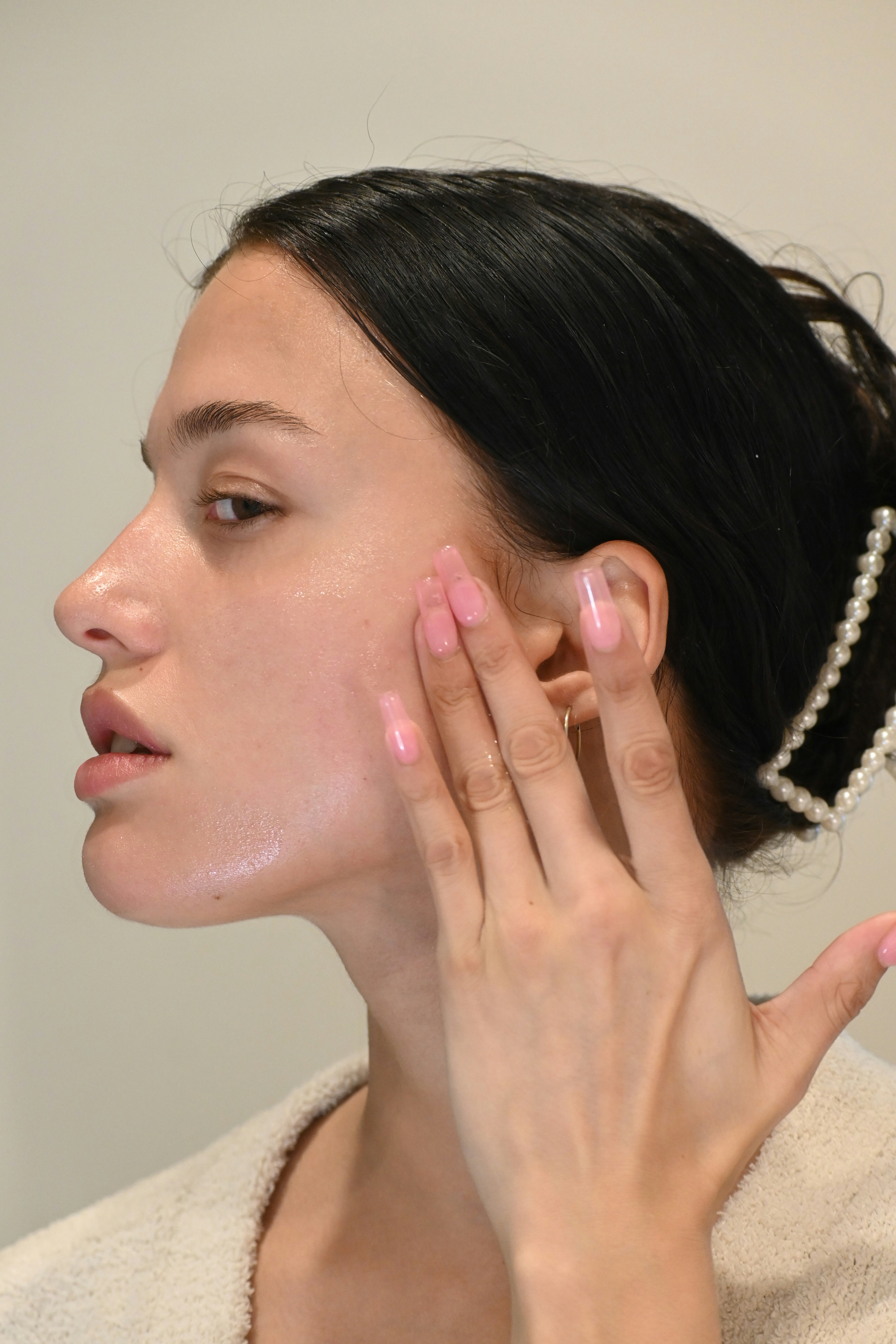
Most skincare changes are subtle before they are obvious. This guide shows how to track texture, redness, breakouts, and comfort over time so you can tell whether your routine is helping, irritating, or doing nothing.
The clearest way to know if your skincare routine is working is to track the same skin signals over time: comfort, dryness, redness, breakouts, texture, tone, and sensitivity. A routine is usually working when your skin becomes more stable, less reactive, and gradually closer to your goal without new irritation.
The hard part is that skincare rarely changes skin overnight. Hydration can feel better quickly, but acne, dark spots, texture, and fine lines often need weeks or months of consistent use. If you judge your routine by one mirror check, one bad lighting moment, or one breakout, you can easily quit too early or keep using something that is quietly irritating your skin.
This guide gives you a practical tracking method so you can tell the difference between progress, purging, irritation, and no meaningful change.
Quick Answer: Signs Your Skincare Routine Is Working
Your skincare routine is likely working if you notice several of these changes over a consistent period:
Your skin feels less tight, itchy, or uncomfortable.
Redness or stinging becomes less frequent.
Breakouts become smaller, less inflamed, or less frequent.
Texture looks smoother in consistent lighting.
Dry patches or flaking improve.
Your skin tolerates sunscreen, moisturizer, and actives more easily.
Dark marks or uneven tone fade gradually instead of getting worse.
You need fewer emergency fixes because your baseline feels more stable.
One perfect skin day does not prove a routine is working. One bad skin day does not prove it is failing. The pattern matters more than the moment.
Why It Is So Hard to Tell
Skincare progress is slow because skin changes through repeated cycles of repair, turnover, inflammation, oil production, pigmentation, and barrier function. Different goals also move at different speeds.
For example, hydration may improve within days if your moisturizer is a good fit. Irritation may calm within one to two weeks after simplifying a routine. But acne, discoloration, texture, and fine lines often need longer. Dermatologists often describe skincare as a long-term habit rather than an instant result; experts quoted by Time note that visible payoff may take weeks to months, depending on the goal and product category.
The second reason it is hard: your eyes are not a reliable measurement tool. Lighting changes everything. Your bathroom mirror, front camera, car mirror, and window light can make the same skin look completely different. That is why a simple skin journal and consistent photos are more useful than daily guessing.
What to Track First
Before deciding whether your routine works, choose the signals that match your goal. Do not track everything with equal intensity.
If your goal is calmer skin, track:
Stinging after products
Redness after cleansing
Tightness during the day
Flaking or rough patches
How often you feel the urge to change products
If your goal is fewer breakouts, track:
Number of new breakouts per week
Type of breakout: clogged pores, whiteheads, inflamed bumps, cyst-like bumps
Location of breakouts
Whether breakouts are smaller or heal faster
Product changes in the previous two weeks
If your goal is smoother texture, track:
Roughness in consistent lighting
Bumps on forehead, cheeks, jaw, or chin
Makeup texture, if you wear makeup
Flaking or over-exfoliation signs
Photos from the same angle every week
If your goal is more even tone, track:
Dark marks after breakouts
Red or brown discoloration
Sun exposure and sunscreen consistency
Whether marks are fading, stable, or getting darker
New irritation that could create more pigmentation
A Realistic Skincare Results Timeline
Use this timeline as a general guide, not a promise. Your skin type, product formula, consistency, climate, hormones, and irritation level all matter.
Goal | When You May Notice Early Change | When to Judge More Seriously | What to Watch |
Hydration and comfort | Days to 2 weeks | 2-4 weeks | Less tightness, fewer dry patches, better tolerance |
Redness from irritation | 1-2 weeks after simplifying | 4-6 weeks | Less stinging, less post-product flushing |
Acne or clogged pores | 4-8 weeks | 8-12+ weeks | Fewer new breakouts, smaller bumps, faster healing |
Texture | 4-8 weeks | 8-12+ weeks | Smoother feel, fewer rough patches, less congestion |
Dark spots or post-acne marks | 6-12 weeks | 3-6 months | Slow fading, no new darkening |
Fine lines | 8-12+ weeks | 3-6+ months | Softer appearance, better hydration, long-term consistency |
Real Simple's dermatologist-sourced guidance similarly emphasizes that many skincare categories need roughly 6-12 weeks, and sometimes longer, before a user can fairly judge visible change. The practical takeaway: do not change your entire routine every week.
Progress vs Irritation: How to Tell the Difference
Some products can create an adjustment period, especially exfoliants and retinoids. But "my skin is getting worse" is not always a normal adjustment. It can also be irritation.
Signs of useful progress
Your skin feels more comfortable overall.
Breakouts are less frequent over several weeks.
Dryness is mild and manageable.
Redness is trending down, even if not gone.
Your skin recovers faster after a bad day.
Signs of irritation
Burning, stinging, or itching keeps happening.
Your skin feels tight even after moisturizer.
Redness is spreading or lasting longer.
Breakouts appear in unusual areas for you.
You are flaking, peeling, or shiny-tight from overuse.
Every product suddenly feels uncomfortable.
If irritation is getting worse, more product is rarely the answer. A safer next step is usually to simplify: gentle cleanser, moisturizer, sunscreen in the morning, and a pause on strong actives until the skin feels stable again. If symptoms are severe, painful, persistent, or involve a known skin condition, talk to a dermatologist.
Do Not Track Your Routine Product by Product Every Day
Daily tracking can become too noisy. Skin fluctuates for reasons that have nothing to do with your serum: sleep, stress, menstrual cycle, weather, shaving, workouts, travel, allergies, and sun exposure.
A better method is to track:
A quick daily comfort score
Product changes
New breakouts or unusual reactions
Weekly photos
A weekly summary
That gives you enough data to spot patterns without turning your routine into a full-time job.
The 14-Day Baseline Method
Before deciding your routine is working or failing, create a baseline. This is especially useful if you are about to start a new product.
For 14 days, keep your routine stable and record:
1. Morning and evening products
2. Any new product, dose, or frequency change
3. Skin comfort from 1 to 5
4. Redness from 1 to 5
5. New breakouts and where they appear
6. Dryness or flaking
7. Weekly photos in the same lighting
Do not aim for perfect tracking. Aim for enough consistency that your future self can understand what happened.
When to Keep Going
Keep going if your routine is boring in a good way. That means your skin feels stable, you are not constantly reacting, and at least one target signal is improving slowly.
Examples:
Your breakouts are not gone, but you are getting fewer painful ones.
Your texture still exists, but your skin feels less rough.
Your redness still appears, but it fades faster.
Your skin is not "glass skin," but it feels comfortable and predictable.
That kind of progress is easy to undervalue because it is not dramatic. But for many people, a routine that makes skin more stable is the foundation for every later result.
When to Change Something
Consider changing your routine if:
You have used a product consistently for a fair trial period with no improvement.
Irritation is getting worse.
You are breaking out in a new pattern.
You added multiple products and now cannot tell what caused the change.
Your routine is too complex to follow consistently.
Your skin goal changed, but your products did not.
Change one thing at a time. If you swap cleanser, moisturizer, exfoliant, and serum in the same week, you lose the ability to learn from your skin.
What to Track in Biuty
Biuty is useful here because skincare progress is not just about one photo or one product. It is about the relationship between your visible skin signals, your routine, and time.
Use Biuty to track:
Your first baseline skin scan
Weekly progress photos
Redness, texture, pores, breakouts, and tone changes
Product start dates
New reactions or sensitivity
Whether a routine change actually improved your skin over 7, 14, and 30 days
Instead of asking, "Does this product work?" after three random mirror checks, Biuty helps you ask a better question: "What changed since I started this, and is the pattern moving in the right direction?"
Key Takeaways
The best way to know if your skincare routine is working is to track patterns, not moods. Look for changes in comfort, redness, breakouts, texture, tone, and tolerance over a realistic timeline.
Hydration can improve quickly, but acne, dark spots, texture, and fine lines usually need more time. If your skin is calmer, more stable, and gradually closer to your goal, your routine may be working even before the change looks dramatic.
Start with a baseline. Change one product at a time. Take consistent photos. Give your skin enough time to show a pattern.
Then use Biuty to scan, journal, and compare your progress so you can stop guessing and start learning from your skin.
Skincare technology editors focused on evidence-informed routines, ingredient literacy, and visual skin progress tracking.
Explore our guides:
The Complete Guide to Skin Concerns · The Complete Skincare Ingredients Guide
Track what actually works for your skin
Biuty helps you compare skin progress over time, understand routine changes, and reduce product guesswork with visual tracking.
Try Biuty
Learn more
Discover more from the latest posts.