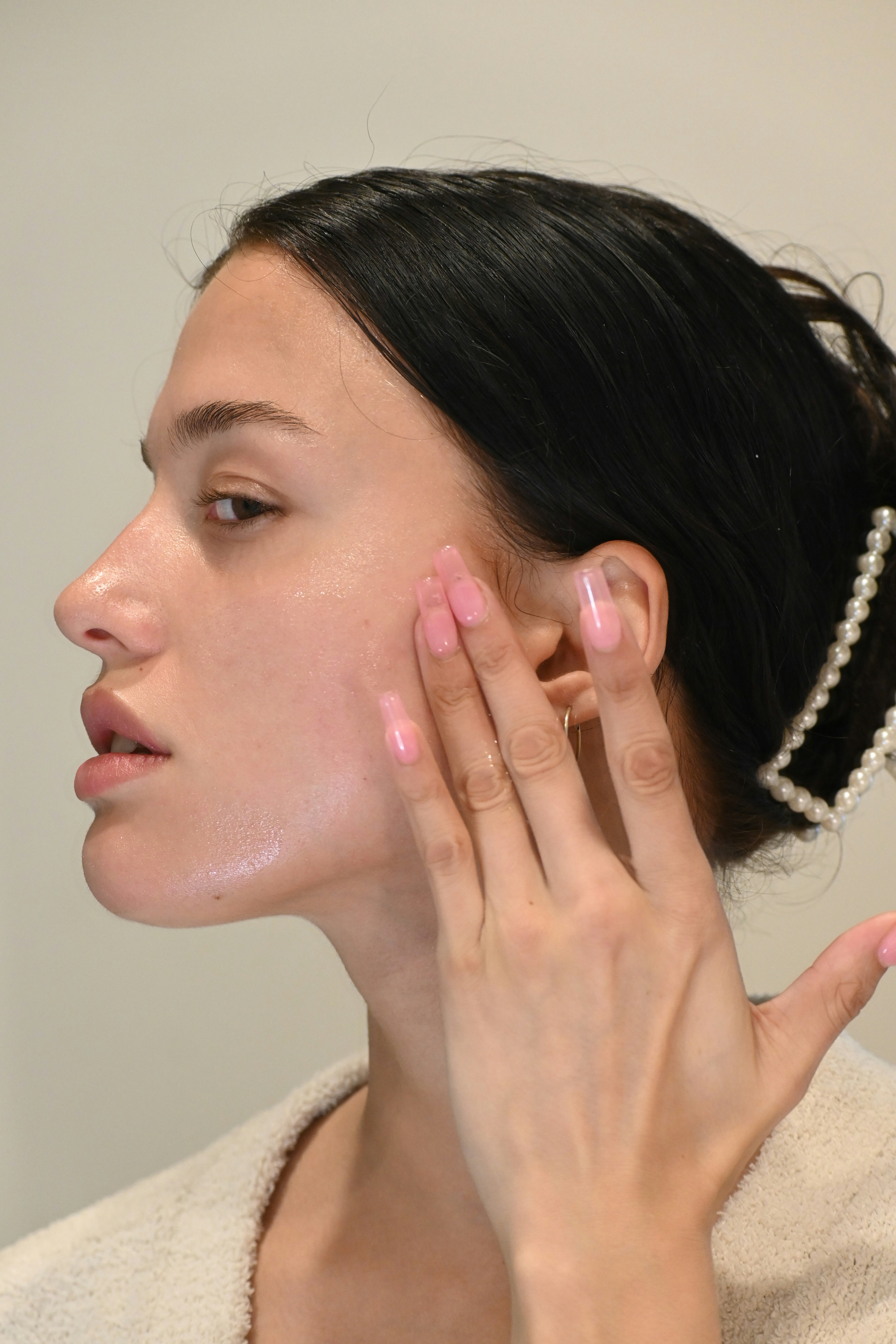
Use the timing, sensation, location, and triggers of facial redness to decide what to pause, what to track, and when a dermatologist should assess it.
Redness on the face is a visible signal, not a diagnosis. The most useful clues are when it started, where it appears, how it feels, what triggers it, and whether it fades. Those details help you decide whether to remove a recent irritant, simplify the routine, track recurring triggers, or see a dermatologist.
Quick Answer
Use this first-pass framework:
sudden redness after a new product: think irritation or contact reaction first
redness with burning, tightness, and widespread stinging: consider barrier stress
recurring central-face flushing triggered by heat, alcohol, spicy food, or sun: ask about rosacea
redness with scale around the nose, brows, or scalp: professional assessment may be useful
swelling, blistering, eye pain, or breathing difficulty: stop troubleshooting online and seek care
AAD lists several possible causes of facial redness, including rosacea, seborrheic dermatitis, and irritant or allergic contact dermatitis. AAD
Compare the Common Patterns
Pattern | Clues to notice | Sensible next step |
|---|---|---|
Product irritation | Starts after a new active or frequency increase; stings or burns | Stop the newest variable and simplify |
Barrier stress | Tight, shiny, flaky, broadly reactive skin; several products sting | Use a basic recovery routine and pause strong actives |
Allergic contact reaction | Itchy, swollen, rash-like, sometimes delayed | Stop the suspected product; persistent cases may need patch testing |
Rosacea-like pattern | Central-face flushing, lasting color, visible vessels, acne-like bumps, trigger pattern | Track triggers and ask a dermatologist for diagnosis |
Temporary flushing | Fades after heat, exercise, emotion, or temperature change | Track frequency and duration if it becomes more persistent |
These patterns can overlap. That is why a single selfie should not be treated as a medical conclusion.
Irritation: Look for a Timing Clue
Irritation often has a clear routine event:
a new exfoliating acid
retinoid frequency increased too quickly
a scrub or cleansing brush
a strong acne treatment layered with another active
a fragranced product on already reactive skin
The change may show up as burning, tenderness, dry patches, or redness concentrated where the product was applied. Remove the newest variable instead of adding a calming serum on top of the problem.
If you need a controlled reintroduction method, use Product Testing in Skincare: How to Introduce One New Product at a Time.
Sensitivity Is a Tendency, Not a Single Cause
"Sensitive skin" describes how readily skin reacts. It does not explain why. Someone may be sensitive because of a disrupted barrier, rosacea, eczema, an allergy, over-treatment, or a combination.
Ask narrower questions:
Does water or plain moisturizer sting?
Is the reaction limited to one product area?
Is itching stronger than burning?
Does the redness follow triggers unrelated to products?
Does it include bumps, visible vessels, scale, or eye symptoms?
The answers determine the next decision better than the label "sensitive."
Barrier Damage: When Everything Suddenly Feels Wrong
A stressed barrier often creates a broad pattern: tightness, flaking, increased water loss, and stinging from products that were previously comfortable. It often follows over-cleansing, too many actives, weather exposure, or repeated irritation.
Use the minimal plan in Skin Barrier Damage: Signs, Triggers, and a Simple Recovery Tracking Plan. The goal is a readable baseline, not a product hunt.
Rosacea: Track the Pattern, Do Not Self-Diagnose
AAD notes that rosacea often involves central facial redness, easy flushing, sensitive skin, acne-like breakouts, or visible blood vessels. Eye irritation can also occur and deserves prompt care. AAD
Common triggers can include sun, heat, wind, stress, alcohol, spicy foods, and irritating products. AAD recommends gentle cleansing, moisturizer, sun protection, and avoiding rubbing or scrubbing for rosacea-prone skin. AAD
Tracking those associations can support a clinical conversation, but it cannot confirm rosacea.
A Seven-Day Redness Audit
For one week, keep the routine stable and record:
morning and evening redness from 0 to 3
burning, stinging, itching, and tightness separately
exact products and application times
heat, exercise, sun, alcohol, spicy food, and stress events
whether the redness fades within minutes, hours, or not at all
photos on day 1 and day 7 in the same light
Use the photography rules in Before-and-After Skincare Photos so lighting does not create fake improvement.
When to Get Professional Help
See a dermatologist when redness is persistent, repeatedly returns without a clear trigger, includes a rash or acne-like bumps, or is affecting your eyes. Seek prompt care for eye pain, vision changes, marked swelling, blistering, crusting, severe pain, or a rapidly spreading reaction. Breathing difficulty is an emergency.
What to Track in Biuty
Create separate signals for color, comfort, bumps, and triggers. A useful note is: "Cheek color rose after a hot workout and faded in 90 minutes; no itching; moisturizer did not sting." That is much more actionable than "face red again."
Key Takeaways
Facial redness becomes easier to troubleshoot when you stop treating it as one category. Timing, sensation, location, triggers, and duration create the decision framework.
Use Biuty to compare consistent photos and trigger notes, then bring persistent or concerning patterns to a dermatologist rather than guessing from appearance alone.
Skincare technology editors focused on evidence-informed routines, ingredient literacy, and visual skin progress tracking.
Explore our guides:
The Complete Guide to Skin Concerns · The Complete Skincare Ingredients Guide
Track what actually works for your skin
Biuty helps you compare skin progress over time, understand routine changes, and reduce product guesswork with visual tracking.
Try Biuty
Learn more
Discover more from the latest posts.